Robust Control of ASVs
Adaptive sliding mode control for autonomous surface vessels under environmental disturbances.
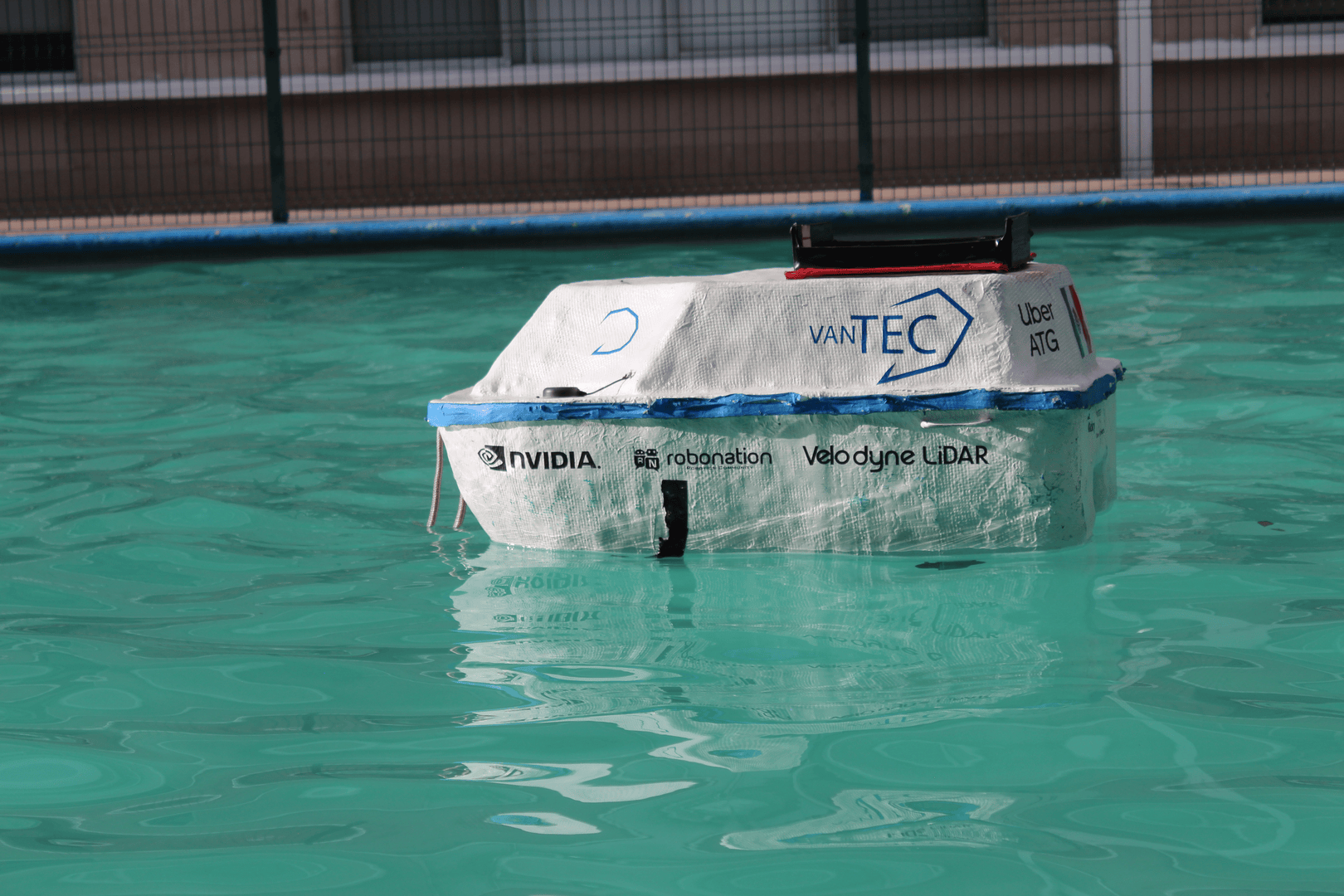
Autonomous Surface Vehicles (ASVs) operate in complex environments subject to external disturbances from wind, waves, and currents. Furthermore, mathematical model discrepancies to the real system, such as unmodeled dynamics or parameter inaccuracies, induce uncertainty. Thus, robust control techniques are required to overcome disturbances and uncertainty, increasing safety, efficiency, and accuracy.
Related Publications
2026
-
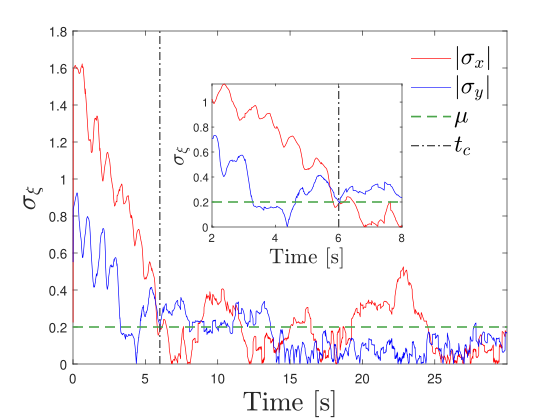 Constant-Rate Convergence for an Adaptive Sliding Mode Controller Using a Fixed-time Disturbance ObserverInternational Journal of Robust and Nonlinear Control, 2026
2024
- Unmanned surface vehicle robust tracking control using an adaptive super-twisting controllerControl Engineering Practice, 2024
- Adaptive sliding mode control with nonlinear MPC-based obstacle avoidance using LiDAR for an autonomous surface vehicle under disturbancesOcean Engineering, 2024

2023
- Novel adaptive law for super-twisting controller: USV tracking control under disturbancesIsa Transactions, 2023
2022
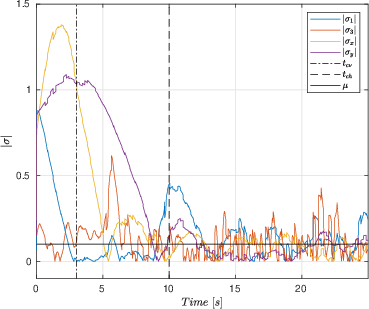
2021
-
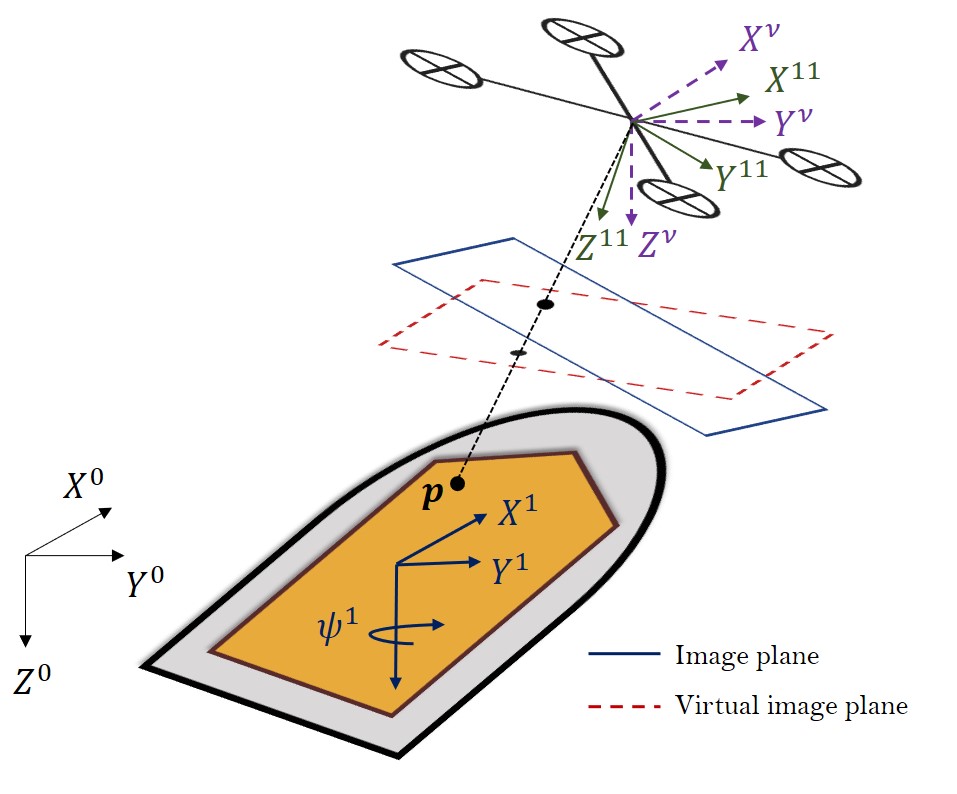 Robust Visual Tracking Control Based on Adaptive Sliding Mode Strategy: Quadrotor UAV-Catamaran USV Heterogeneous SystemIn 2021 International Conference on Unmanned Aircraft Systems (ICUAS), 2021
 - Adaptive Integral Terminal Sliding Mode Control for an Unmanned Surface Vehicle Against External DisturbancesIFAC-PapersOnLine, 2021
2020
- USV Path-Following Control Based On Deep Reinforcement Learning and Adaptive ControlIn Global Oceans 2020: Singapore – U.S. Gulf Coast, 2020